About
Microtubule Catastrophe: The Long and Short of It
Victoria Chen, Hannah Hu, Andy Tong
Abstract
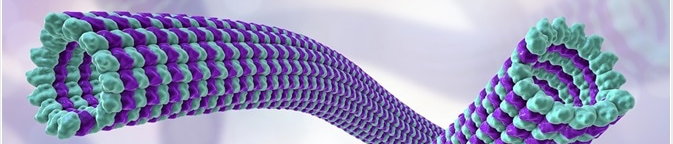
Microtubules are structural proteins present in the cytoskeleton of the cell that undergo growth through polymerization of tubulin and rapid shortening through depolymerization in a process called catastrophe. Statistical analysis was done on a dataset of the time in seconds it takes for a microtubule to undergo catastrophe at different concentrations of tubulin. The initial assumption was that the time to microtubule catastrophe was gamma distributed, but we present a second model which assumes two successive Poisson processes which are necessary for catastrophe to occur. Parametric bootstrapping was used to determine the maximum likelihood estimations for the parameters of both models (minimum number of occurrences necessary for catastrophe and rate of occurrence for the gamma distribution, and the two rate of occurrences for the two Poisson processes model) as well as their confidence intervals. A comparison between the two models showed that the Gamma distribution model fit the distribution of the data better than the successive Poisson process model. Comparisons between different concentrations of tubulin showed that higher concentrations of tubulin resulted in a higher number of steps estimated to produce a catastrophe, and the rate of occurrence of each step peaked at a 10 uM concentration of tubulin.
Acknowledgments
This website showcases work done throughout Caltech’s BE/Bi 103a course utilizing a fantastic dataset from Garner, Zanic, et al. Special thanks to Justin Bois and course staff for making all of this possible, as well as to Griffin Chure for instruction on reproducible research and providing the template for this website.